Best Coronary Angiogram Doctors in Sarjapur Road
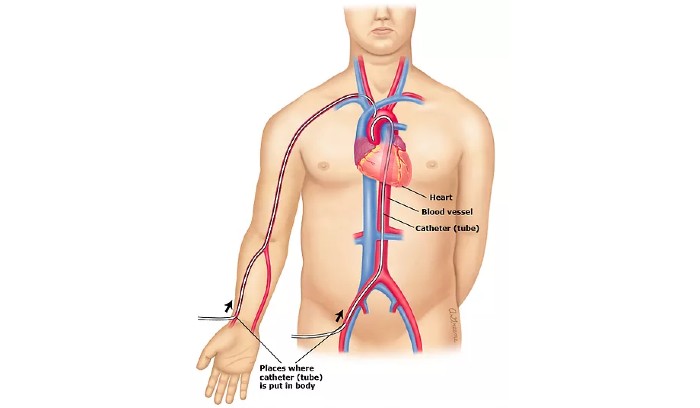
It is a simple and relatively safe procedure by which the coronary arteries are visualised on fluoroscopy. A catheter is inserted usually form the radial artery (in the wrist) or the femoral artery in the thigh and reached up to the heart at the origin of coronary arteries which supply blood to the muscles of the heart. An iodine contrast dye in injected and the vessels are visualised on fluoroscopy (a form of live x-ray imaging). The procedure can be a day care procedure and the process should take anywhere between 10 to 20minutes.

However since it is an invasive test, there is a very small chance of the dye causing allergic reactions or weakening the kidney function. You will also be exposed to a small amount of x-ray radiation
Frequently Asked Questions
Yes. It is generally a relatively safe procedure, although, like any invasive test, it has some risks related to coronary angiography.
Yes. The catheter is usually introduced through the radial artery in the wrist or the femoral artery in the thigh for coronary angiogram.
An iodine-based contrast dye is injected, allowing the vessels to be viewed using fluoroscopy.
Not necessarily. A day-care coronary angiogram may be possible when appropriate, depending on the patient's condition and medical assessment.
Usually not. The procedure generally takes around 10 to 20 minutes.
There is a very small possibility that the contrast dye may temporarily weaken kidney function.
Yes, although they are uncommon. Doctors take appropriate precautions when using iodine contrast dye.
The procedure involves a small amount of X-ray radiation because fluoroscopy imaging is used to view the coronary arteries.
The catheter allows the doctor to reach the origin of the coronary arteries and inject contrast dye for detailed visualization.
Yes. When appropriate, doctors can use the femoral artery in the thigh as an alternative access route for coronary artery imaging.